Interview clothing by industry: what to wear without overthinking it
What you wear to an interview is read as a signal of fit. The signal differs across industries — here's the working map.
On this page
Clothing is the smallest interview variable that candidates spend the most time on. The honest answer to "what should I wear" is that it matters less than your preparation, but it matters more than zero, and the cost of getting it wrong is asymmetric: the wrong clothing can flip a borderline interviewer against you, while the right clothing rarely tips them toward you.
This post is a working map by industry, with the caveats that actually apply.
The asymmetric risk
The reason interview clothing matters is not because the right outfit wins you the job. It's because the wrong outfit can lose it. Specifically:
- Over-dressing for a casual industry (a three-piece suit to a Series A startup interview) reads as misreading the culture.
- Under-dressing for a formal industry (chinos and a polo to an investment-bank interview) reads as not having taken the meeting seriously.
Both extremes are recoverable, but they're an extra hurdle. The default rule that works in roughly 80% of situations: dress one notch above what you think the day-to-day office wears. If the office is in jeans, you wear chinos and a blazer. If the office is in business casual, you wear a suit jacket. The risk premium is small and the upside is real.
The industry-by-industry working guide
Industry-by-industry working guide
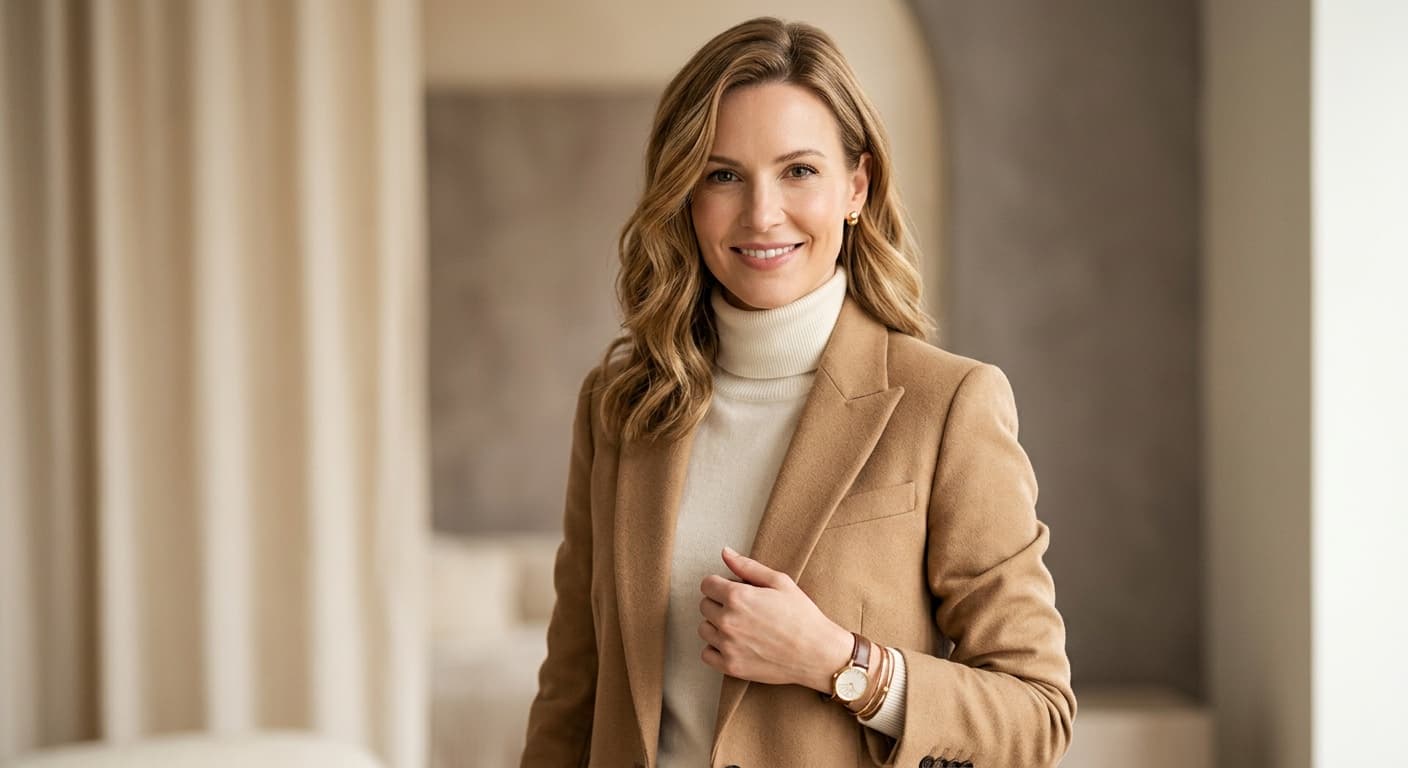
Six dress codesNavy or charcoal suit, white or light-blue shirt, conservative tie or no tie depending on the meeting level. For women: tailored pantsuit or knee-length skirt, blouse, low or moderate heel. Even at casual firms, interviews still skew formal. When in doubt, dress one level above.
Dark jeans or chinos, button-up or quality knit, blazer optional. No tie. Sneakers acceptable if they're clean and intentional. The signal you're going for: 'I'd fit in on day one without making anyone uncomfortable.' Avoid full suits — they read as overdoing it.
Business casual minimum. Slacks and a button-up or blouse. Clinical roles often expect scrubs or a coat in part of the day if you're shadowing, but interview itself stays in business casual. Avoid heavy fragrance — many environments are scent-sensitive.
Expressive within reason. A blazer over a tee, a notable shoe, or a confident accessory is acceptable and sometimes expected. Total looks should still read 'considered.' Industry signal: you understand visual culture without performing it too hard.
Clean polo or button-up, slacks, closed-toe shoes. If you're going to a plant tour as part of the interview, ask in advance whether steel-toes or hi-vis are needed. Over-formality in trade-floor environments reads as out-of-touch.
Top half matters, but the bottom half still needs to work in case you stand up. Solid colors, no busy patterns or shirts that flare on camera. Test your camera 10 minutes before — make sure your shirt and the background don't visually clash.
The cards above are a fast working filter. A few additional notes by category:
Finance, law, consulting. Even at firms that have softened their day-to-day dress code, interviews still skew formal. A navy or charcoal suit with a conservative shirt is hard to get wrong. The exception is some boutique consulting and venture-affiliated finance, where business casual is genuinely the norm — when in doubt, ask the recruiter what their candidates usually wear.
Tech, product, design. The default for interviews at scaled tech companies (Stripe, Datadog, Snowflake, etc.) is dark jeans or chinos, a quality button-up or knit, and clean shoes. A blazer is optional and not penalized either way. Full suits are mildly negative at most non-financial tech companies — they signal that you might not understand the working environment.
Healthcare, education, nonprofit. Business casual is the minimum. The specific quirk is scent — many healthcare and education environments are scent-sensitive (allergies, patient sensitivity). Skip the fragrance.
Media, advertising, agency. Expressive but considered. A blazer over a tee, an unusual shoe, a single noticeable accessory. The signal is "I understand visual culture but I'm not performing it." Boring suits read as a mismatch with the work.
Manufacturing, logistics, trades. Functional. Clean polo or button-up, slacks, closed-toe shoes. Over-formality reads as not understanding the floor.
Video / remote interviews. Solid colors, no busy patterns that flare on cheap cameras, and a top half that doesn't bleed into the background. Test 10 minutes before. The bottom half still needs to be presentable in case you stand up.
Same role, different industry
Same role, different industry — same person, different fit
Industry signals- Software engineer at Goldman: dark navy suit, no tie
- Software engineer at Stripe: dark jeans, oxford, clean leather sneaker
- Software engineer at a Series A SaaS: chinos, henley or quality tee, maybe a blazer
- Software engineer at a defense contractor: slacks, button-up, plain belt
- Software engineer at a research lab: smart casual, possibly more relaxed than Stripe
- Full suit and tie to a Series A startup interview
- Hoodie and joggers to an investment-banking interview
- T-shirt with a competitor's logo to anywhere
- Loud novelty tie to a conservative firm
- Heavy cologne or perfume to a healthcare environment
The compare-list shows a worked example: the same person, a software engineer, in five different industry contexts. The clothing changes meaningfully across them, and the change is the signal that matters.
The general principle: the clothing you wear is read as a proxy for cultural fit. Wearing a hoodie to a buy-side interview signals you don't know how the industry works. Wearing a full suit to a developer-tools startup signals the same thing, just in the other direction. The candidate who reads the industry correctly is signaling that they'll read the rest of the job correctly too.
How much does it actually matter
How much does clothing actually affect interview outcomes?
Real signalStudies on hiring decisions consistently find clothing as a non-trivial but secondary factor. It rarely makes a borderline candidate, but mismatched clothing — too casual or too formal for the industry — can flip a borderline call against you. The asymmetric risk is why dressing 'one notch above' is usually the safer default.
Source · SHRM Hiring Manager Surveys, Harvard Business Review studies on impression management (2020-2023)
The honest finding from impression-management research: clothing is a real but secondary factor in interview outcomes. It accounts for roughly 5-10% of the first-impression signal in most studies, and it rarely makes a borderline candidate. What it does do is shift the marginal interviewer who was on the fence — toward you when right, away from you when wrong.
This is why dressing "one notch above" is usually the right default. The downside of being slightly over-dressed is rarely fatal (you look earnest). The downside of being under-dressed is occasionally fatal (you look like you didn't think about it).
How to figure out the dress code
A few sources that work:
Ask the recruiter directly. "Should I expect the dress code to be business casual or more formal?" Almost every recruiter will answer this honestly. It's a normal question and removes guesswork.
Look at the company's All-Hands or careers-page photos. Companies post photos of their team. The team's casual day-to-day clothing tells you what "one notch above" looks like.
Check Glassdoor for interview-attire mentions. Candidates who interviewed recently often mention what they wore. Search the company name + "interview attire."
Default to slightly more formal for first-round, slightly less for later rounds. A first-round phone or video call: business casual. A final-round in-person panel: one notch up. The progressive softening signals you're getting familiar with the company.
For broader interview prep, see virtual-interview-camera-lighting-setup for the video-specific concerns, and panel-interview-dynamics for in-person multi-interviewer days.
A note on what not to overthink
Some specific things candidates worry about that don't matter much:
- Watch brand. No interviewer notices, except in finance where wearing a flashy luxury watch can read as ostentatious. Default to a plain watch or no watch.
- Bag. A clean leather portfolio or a quiet backpack is fine. Don't bring a roller suitcase unless you're flying in same-day.
- Notebook vs. tablet. Either is fine. Take notes on whatever you'd normally use.
- Color. Solid muted colors are safe. Loud patterns are usually fine in creative industries and a small distraction elsewhere.
What this isn't
A few clarifications:
- It's not a rule about expressing your personality. Wear what you'd be comfortable in for the role. Within the industry's range, there's plenty of latitude.
- It's not the same in every region. US-default is different from EU-default is different from Asia-default. Calibrate for the office's region, not your home country.
- It's not a substitute for prep. No interviewer remembers what you wore if your answers were strong. They might remember if your answers were weak.
The short version: dress one notch above the office's day-to-day, match the industry's tier, and don't make clothing the variable you obsess over. Five minutes of research on the company's photos and one question to the recruiter solves 95% of it.
More to read
 6 min read
'Tell me about a conflict with a coworker': what the question is really testing
Interviewers ask about coworker conflict to test how you read other people and handle disagreement — not to confirm that you've never had one. Here's the structure that works.
interviewsbehavioral 5 min read
AI mock interview tools: which actually help and which are theater
AI mock-interview platforms promise practice at scale. A few are useful. Most are distraction. Here's a comparison of what actually helps.
interviewsai-tools 5 min read
Coding interview prep without burning out: how to not over-prep
Most coding-interview prep advice points to 500 LeetCode problems. The realistic floor is much lower — here's what actually moves your pass rate.
interviewscoding 5 min read
'Tell me about a failure': what to pick and how to tell it
The failure question rewards specific stories and punishes humble-brags. Here's how to pick the right failure and structure the answer.
interviewsbehavioral